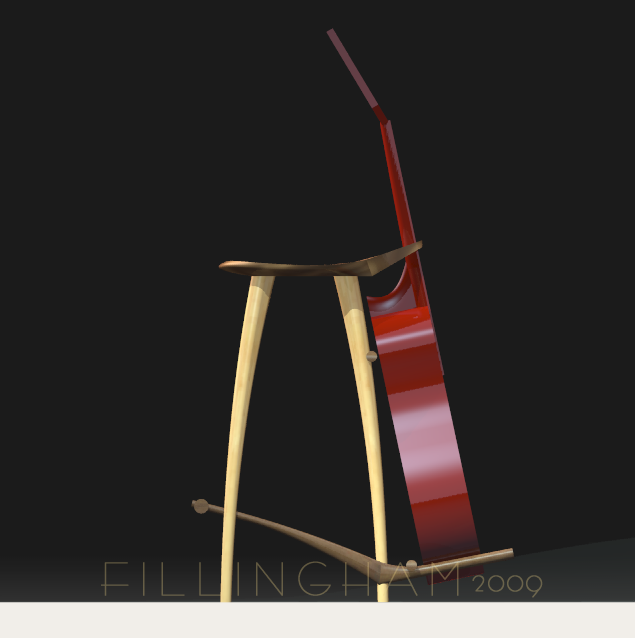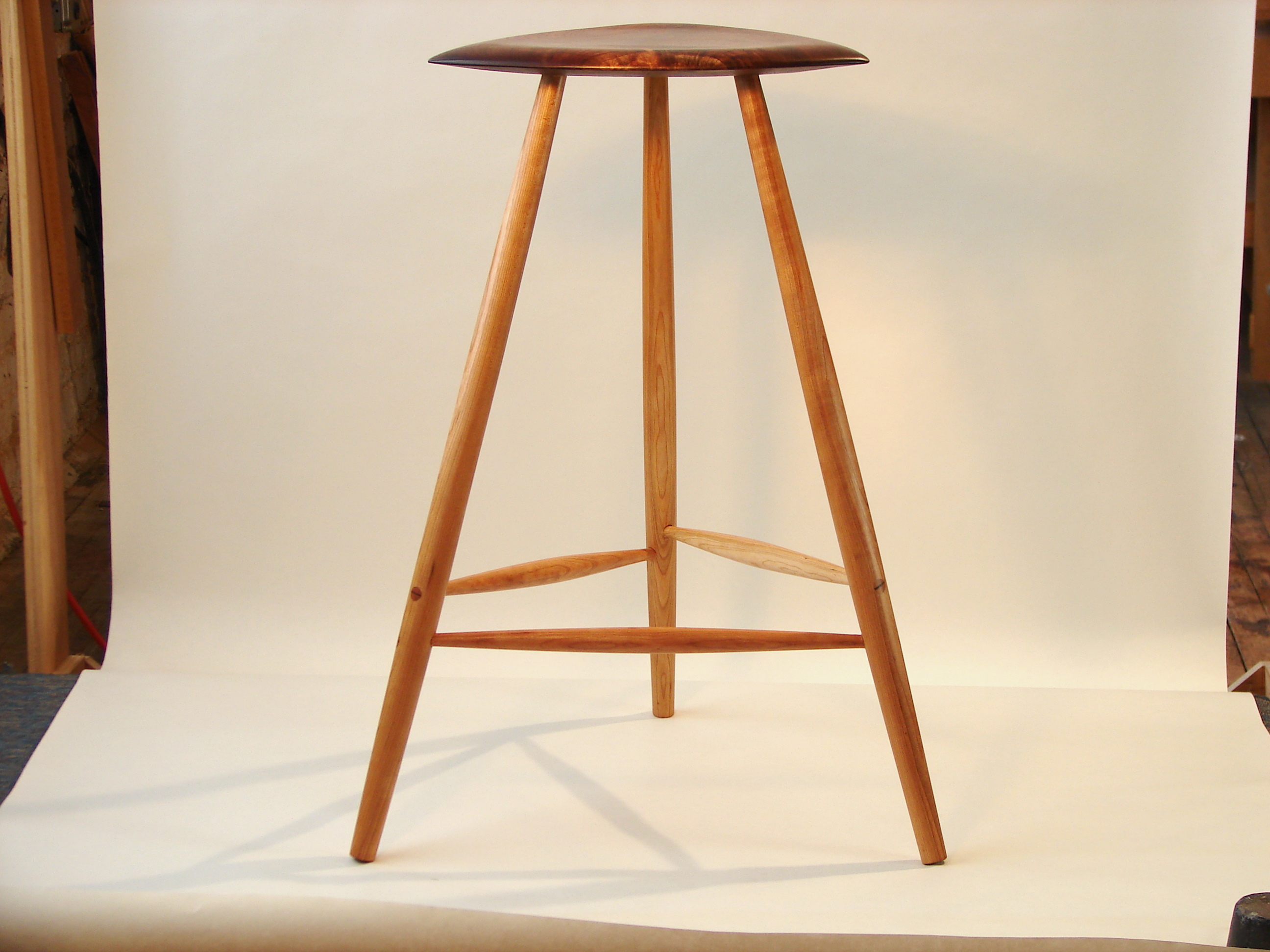
the approach deja vu

Way before Photoshop was ever conceived of I use to spend some time in a dark room I put together while still a high school student. I would shoot 35mm black and white tri-x or pan-x film (terms of antiquity), develop the negatives then work at creating a print. I tried to make the prints evocative of the shape and patterns of the world around me. This was when I was approaching adulthood and a lot of the world seemed to swirl around me in a meaningless way. Maybe I was creating beacons for an older me. It would be nice to think that after so many years. Ego beacons bobbing up occasionally to tweak my normal, obsessively linear view of time.

I ran across an old acquaintance on Facebook and remembered that I had a few old images that he may want to see. While rummaging about to find them I came across several others from that era. This is one. One that I had created in the darkroom. It has it’s fair share of faults I guess but they show that it was hand crafted.

A lot was going on back then especially around that park. It’s a long story, but people were hurt, arrested, the cops rioted. I don’t know the woman in the foreground but her expression seemed to sum up some of what was going on. I scanned the print just as I found it, I didn’t even take it out of the old album page for fear of damaging it.

Once I put it on the scanner I realized that I was about to make some choices that would effect this new version of this old image. A couple of images had been formed on negative film. I chose the paper and exposure, dodging and burning to create the print, showed it around for a while then slid it into a page in an album. Years later I’m back to deciding how it will look again. I suppose your monitor affects the image you are seeing. Since I’m making choices I could “correct” some spots, old marks and flares, white fossils of a loose hair and lithe puddles from developer and fixer. No, I’ll pretend that this is a true representation of what I hold in my hand.

Once scanned I can zoom in. I see a pattern in a detail that I had never seen before.

Brachia like shadows across her face pattern her expression.

And reach down her neck and throat. Tattoo foreshadow? Something tactile in this image, a smooth surface covered in random texture. Marshall McLuhan wrote of this phenomena, the frisson created. He referred to fishnet stockings on a smooth leg. This is more ominous. It is with trepidation that one approaches adulthood. A knighthood of sorts, not to be taken lightly. Nevertheless a font from which so much will and has flowed.

the approach

For the last 3 weeks I’ve been connecting with a group of teenagers as they learn about water, boats and the making of boats. The Milwaukee Community Sailing Center asked me to help in a summer program along with a group called Teen Approach. I was to provide what was needed to have the young people build and then ride in a boat. I had done a similar workshop last year.

I was to work with the teens and volunteers and a staff member from the Teen Approach program in the afternoons for 7 days. During the mornings instructors from Milwaukee Community Sailing Center (MCSC) taught the kids how to sail out on Lake Michigan.

I considered several designs and chose to stay with the design of the boats we built last year, a design called the “6 Hour Canoe”. An optimistic name that provides that sometimes critical ingredient needed in any challenging venture.

I prepared several pieces the week before the class so that the project could flow smoothly and be accomplished within the short time frame. We initially started with 6 students, various scheduling conflicts winnowed the core group to 4 by the time the boat was launched.

MCSC provided a shop space for us to work and this was how far we got by the end of the 3rd day.

The gunwales as well as the chine logs were clamped into place with dry wall screws as the epoxy thickened with cotton fibers that forms the adhesive we used through-out sets up. This meant a lot of screws were driven in and a lot of screws were removed. “Not the screws again!”

Soon the boat builders were fitting the bottom onto the upturned hull.

Once the outline had been traced the cutting could begin.

At this point we were down to 5 builders and they each took a turn using the jig saw while the others held the work piece in place, offered advice or took some time to absorb what it was they were doing.

The boat has nice lines. The boat builders sealed any exposed end grain with epoxy resin and filled any gaps and all screw holes with an epoxy filler. Lots of sanding brought the boat to a smooth enough surface for painting.

Sanding was one of the steps that the builders seemed to enjoy the most. Bending in and gluing the gunwales was an early step, a dramatic step and a somewhat tense step. They seemed relieved once the process became predictable. They also started taking ownership of the project, realizing that they were close to accomplishing quite a feat.

Soon the major, local media showed up…

…and the builders found an eloquence that was very refreshing, but not really surprising as they were being interviewed.

More paint!

As one coat dried I took a poll to see how many of them thought their boat would float. Four out of five maintained the optimism we started with. The fifth relished his outsider position for a short while before joining in to form a consensus.

There was some mixed opinions however when I asked them why it would float. Gravity was considered, the fact that wood floats was a popular view point, but there was a certain amount of doubt about the answer. Another break in the action as the paint dried allowed an opportunity to fill a large bucket with water and get down to some serious experimentation. We were able to discover the concept of displacement by using a shop made measuring device (a scrap of wood and a pencil) and we were able to witness a small plastic tub float until filled with water. The plastic tub, quickly known as a boat, was able to carry quite a number of stones without sinking but displacing ever more water, until of course the large rock appeared. It’s always good to check for the limits.

The force of the displaced water on our plastic boat could easily be felt and soon issues regarding the difference of weight and mass were being bandied about until another consensus was agreed upon about the weight of the water displaced and the weight of any vessel. OK, we could feel safe that the boat would float based on more than a democratic vote over the matter.

Now, the really important part needed to be resolved. Two parts actually, the boat’s name and it’s decoration.

The name was decided to be “Teen Approach”, the name of the summer program they attended, but also there was some mention of their own approach. Purple waves were added by some drawing an outline in pencil, another darkening the outline with a marker, a painter weilding a big brush and another with a small.

Screw eyes were added to attach light line that would hold in inflatable racing buoys that worked well for the additional flotation required by those who happened to have been sitting behind some desk indoors while the colloquium on displacement was being held. Tomorrow would be the launch.

The crew had dwindled to four by that time.

But…

…these seasoned shipwrights had brought along a contingent from the rest of the Teen Approach program to witness the launch and provide some labor for hauling the boat to the water.

The good ship was brought to the water.

And launched!

“Believe me, my young friend, there is nothing -absolutely nothing- half so much worth doing as simply messing about in boats. Simply messing…”

-Kenneth Grahame

add to del.icio.us :: Add to Blinkslist :: add to furl :: Digg it :: add to ma.gnolia :: Stumble It! :: add to simpy :: seed the vine :: :: :: TailRank :: post to facebook

Biedermeier

Armoire base by Todd Fillingham

I’ve been fortunate enough to have been commissioned to design and make a number of furniture pieces in the Biedermeier style. This is somewhat unusual in that my studio is located in the Midwest (of the North American continent). The one style that has been consistently popular in this region has been Arts & Crafts. It’s always pleasant to explore styles of other periods and regions.
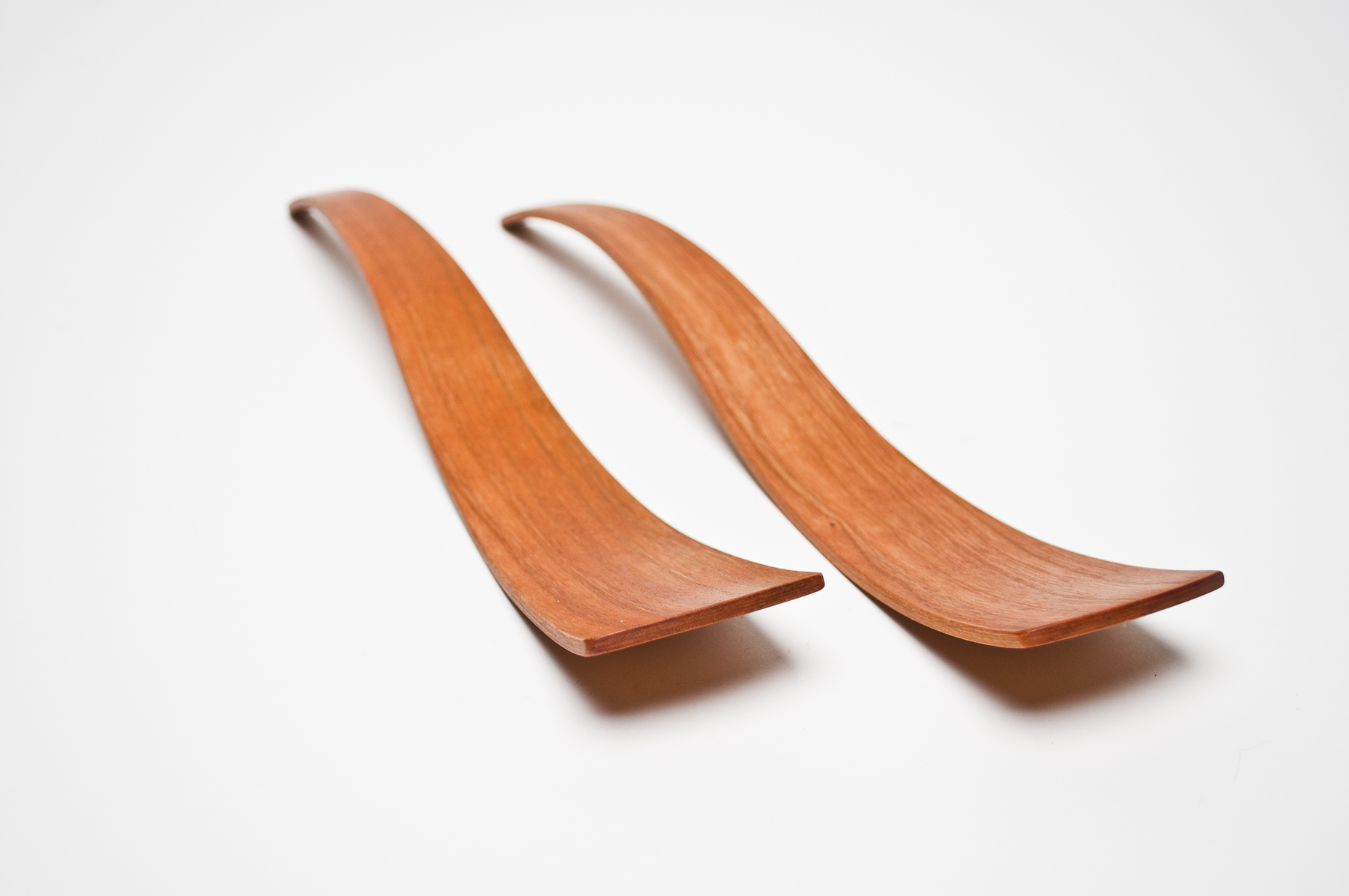
The Biedermeier style evolved from the economic and political changes that swept Europe in the first half of the 19th century. Often thought of as a response to the French Empire style it has been characterized as resulting from the growth of the bourgeoisie in German speaking regions of Europe after the defeat of Napoleon at Waterloo in 1815. As with many efforts to shake off the old and make a change some of the furniture that emerged from this era was awkward and clunky.

As a designer and craftsperson I sought to avoid the poorly proportioned and unbalanced look and try and discover elements of the Biedermeier style that were graceful. One of the first that struck me when studying Biedermeier furniture was the use of veneers in a way that tied a piece, particularly cabinetry, together into a unified whole. It is sometimes called a waterfall affect in which the grain is matched through all elements of a face and around onto the top. A detail from a piece I created can show this march of the grain.

I added red arrows to help illustrate this affect. You may be able to see it as well in this full image of the piece.

Even though the various parts and sections of the casework were not all aligned onto the same frontal plane, as if projected onto a flat screen, the use of the veneer grain contributed to what I see as a very modern look. It has a look as if the parts were punched out of one sheet of material and then folded around to create a three dimensional case. I also sometimes see it as if pigment was poured over the piece and allowed to drip down the front. Because it is the natural grain it is very naturalistic and at the same time very graphic. Perhaps this is why I often think of the Biedermeier style as a transitional style. It is by no means at a dead end. It is pointing to modernism.

By the way, it is not altogther clear where the term Biedermeier comes from. Joseph Aronson in his “Encylopedia of Furniture” from Crown Publishers 1965 says “[t]he name derives from a comic-paper character, Papa Biedermeier, symbol of homely substantial comfort and well-being –Gemutlichkeit.” And Hakan Groth says, “The term ‘Biedermeier’ is often wrongly assumed to be the name of a cabinetmaker or designer of the period. During the late 1840s in Austria and Germany, the preceding era (1815-1847) was subject to a barrage of satire, which finally led to the very furniture being mocked.” I have also seen reference to a fictional, comic poet named Biedermeier. It is clear however that this style did veer into regions that were easily mocked. Without jumping into an extended discussion about absolute values of design I will say that I wanted to work with the elements of Biedermeier style that could be brought together with a sense of proportion, balance and grace.

At the time I was exploring Biedermeier design I was doing almost all of my design work on paper in pencil and sometimes watercolor and colored pencil. Here is drawing of a chair I designed followed by a picture of the final piece.

In as much as the Biedermeier style was a reaction to the much more, perhaps, pompous Empire style it used a very similar vocabulary. It was far from revolutionary. It sought to adjust and perhaps contain some of the excesses the emerging bourgeoisie felt were beyond the pale. Among some of the elements that were retained and sometimes re-interpreted was the use of black to contrast with the grain of the fruit woods commonly used. Gone were the gold and the gilt however, except perhaps as discreet functional accents such as pulls. Another element retained was the column, that reference to Roman dominance and power. The Roman column was also and quite likely even more a symbol of stability. And it was in the use of the column that I was able to start to work out the proportions that I would use. For the columns used in western European design derive from the classical orders of Greek and Roman architecture.

There is a great reference book that I use quite a lot, “Cabinet Making and Millwork, Tools Materials Layout Construction” by Alf Dahl (who at the time was Head of the Building Trades Department of the Los Angeles Trade-Technical Junior College) and J. Douglas Wilson (who at one time was the curriculum supervisor for Trades and Industries at the Los Angeles City Schools), originally published in 1953 by the American Technical Society. In just over 300 pages this classic comprehensively covers and amazing amount of material. I may do a post just about this one book one day. For now I want to introduce two illustrations found in the book that show the classical orders and how proportions for various elements are derived from the diameter (D in the figures) of the column.

Click for larger size.

click for larger image

There are many ways to approach proportion and balance in design. Using the classical orders seemed appropriate historically when designing Biedermeier style furniture although it wasn’t always practical. All of this work was custom design work and as such I had to take into account the view of two clients in this case, the interior designer I was working with and the end user client. Sometimes I had to adjust proportions to meet the functional needs of my clients. I always try to do this adjustment within some coherent framework. In some cases I work with the proportions ascribed by the Golden Mean and have found that much of the architecture derived from the classical orders also relates to the proportions derived from the Golden Mean. Much has been written about the Golden Mean. All I will do here is draw your attention to a very interesting book on the subject by Gyorgy Doczi, “The Power of Limits, Proportional Harmonies in Nature, Art & Architecture” published in 1981 by Shambala press.

Here is a study I did for a proposed design for the desk pictured above.

The proposed column design is drawn horizontally across the top, many of the other proportions were derived from this element.

Another piece from this series was this large armoire, the base is shown at the top of this post.

The bedroom set was completed by two night stands and a bed.

This is a detail of the column base for the bed.

Another project that was related to the Biedermeier style of furniture I was fortunate to work on was a dining table I designed and made to go with a set of antique Biedermeier chairs a client had purchased. The interior designer I worked with on this project and the client had seen a table that they wanted to go with the chairs. The table had a solid top and they were looking for a glass top so they approached me. They gave me a small clipping of a small section of the carved legs that they particularly liked of the original table. I was able to create a table that was carved on both sides of the rails so that when one viewed the rails and legs through the glass top the whole piece looked finished. The table was then finished by Catherine Lottes using stains, glazes and gold leaf. Below are some images of the carved table base before and after the finish was applied.

Table carving by Todd Filingham

The challenges I’ve found when working in a wide variety of styles are part of the reason I love this work so much. You may have noticed that the style of work I’ve shown in his post is not very close to a lot of my other work. Nevertheless I find it fascinating that in being a craftsperson and working in other styles in which you have to actually create a real object or set of objects in the real world you have an opportunity to unwrap layers of history and thought. You are uncovering the same practical and aesthetic problems others, sometimes long ago, have worked on. Through your hands you can touch the ideas of others.

add to del.icio.us :: Add to Blinkslist :: add to furl :: Digg it :: add to ma.gnolia :: Stumble It! :: add to simpy :: seed the vine :: :: :: TailRank :: post to facebook

A Rocking Chair

A friend of mine and his wife are having a baby! They asked if I had a rocking chair design. I hadn’t, but it was something I had been thinking of and working on, off and on, for a long time. I decided to finally complete a design with the hope that my friend would like it and want the chair. Above is a rendering I’ve just completed of my design. Below I’ll write a little about the process of designing the chair.

I knew that one of the biggest hurdles facing me in this project was Sam Maloof. Sam created the definitive craftsman designed and made rocker many years ago. Many, many woodworkers have copied, emulated and been inspired by the Maloof chair and it’s no wonder. Not only is the Maloof chair in many ways beautiful he also published how he made the chair along with drawings with dimensions. The earliest article I’ve found is his “How I Make a Rocker” in the September/October 1983 issue of Fine Woodworking magazine.

Actually I told my friend about the Maloof rocker and he indicated that he had seen versions of it already but he wanted me to re-interpret that rocker in my own way. There were elements of that rocker that didn’t really look right to my eye, that I thought may have been concessions to practicality, to designing a chair that could be sold at a given price point perhaps. This is part and parcel of the design process and I cannot criticize this aspect of the process at all. It is necessary if the design will ever be built. But this did give me an entry point to the design.

I was surprised though that with so many others making versions of this chair no one else had addressed the issues that I saw. So, I decided to use the Maloof chair as my starting point and try and work out those elements that just didn’t sit right with me. In doing that I hoped that I would come up with a design distinctive enough that I could put my name on it.

Kem Weber designed a chair he called the Airline Chair. My sketchbooks have many drawings of variations of this chair and in going back through them to review my past attempts at this summit I decided to pull some of this work out and stare at it for a good long time. You can see an example of Weber’s chair here. And here is one of my sketches that shows the influence of that chair:

After quite a bit of sketching with pencil on paper I moved to my CAD program, Rhinocerous and started “sketching” on the computer. I developed a profile that I found interesting.

The circle and arrow were part of my study of the center of gravity for a person on the rocker.

I also used my “ergo man” to study the profile.

I would return to my ergo man throughout the process to check dimensions and the location of the arms and back spindles. I continued to refine the profile.

I then used the profile drawings to guide me as I built the design up into 3 dimensions. I also used the Flamingo rendering program to apply wood grain and texture to the design. Here is an early rendering I created to see if I was headed in the right direction.

It became apparent to me that I was getting close but still had a lot of work to do. It was right around here that I realized that I did not like the crest rail, that rail at the top that the spindles ended into. It was not only derivative of the Maloof design but it was too heavy for my eye.

Once I changed that rail I was free to change the profile of the back legs as they rose up to meet the crest rail. I was able to then add a curve in a different plane, to bow them slightly. This was getting exciting now.

Here’s an image showing the bow I am talking about.

The above image also shows the changes I made in the front legs. I added material to them and shaped them to reflect the bow of the back legs in the same plane. With the curve of the crest rail I was expressing a cradling of the sitter. I emphasized this cradling by adding curved brackets at the joint of the back legs and the crest rail, up at the top.

I resolved a couple of other issues, particularly the joint of the back legs to the arcs that curve under and support the seat and really felt as if this chair was becoming complete. Here’s another view of the finished design.

Since my friend and I are both surfers, as is my friend’s wife for that matter and their new baby will likely surf as well I did a rendering of the chair in maple with walnut stringers in the seat. A reference to surfboard stringers.

I list the chair on my website here although this is the only place I show the surfer version (so far).

add to del.icio.us :: Add to Blinkslist :: add to furl :: Digg it :: add to ma.gnolia :: Stumble It! :: add to simpy :: seed the vine :: :: :: TailRank :: post to facebook

Civilization

It was the horizontal sleet in my face that was the hardest to take. It nearly blinded me.

Saturday we had gale force winds, sleet and snow. The winds kicked up some good size waves on the western shore of Lake Michigan. We had quite a bit of rain the days before and along with a ton of melted snow the sewage system here in Milwaukee was overwhelmed and the water works was dumping sewage into the rivers and lake. That shut down a couple of beautiful surf spots, leaving few choices if you wanted to paddle out.

One spot far enough away from the sewage release had a hellatious current. That left a spot just south of the ruins of a once well maintained beach resort. All that is left these days are three groins made of jumbled concrete that go from the beach directly out into Lake Michigan and the rotting slabs of concrete along the shore of what were once large structures, bath houses, concessions, and even a tramway. Now the slabs thrust rusting rebar up into the waves near shore making surfing there especially dangerous.

With north winds the groins create a point break of sorts, bending the waves around in clean arcs of peeling grace. Saturday was a different story. Saturday was just this side of manageable chaos, near washing machine conditions.

The wave period, the time between wave peaks was a mere 6 seconds. The waves were waist to chest high but were being blown in as chaotic peaks. The air was 38 degrees as was the water and the sleet came in horizontally. Looking out into the lake to watch for incoming waves hurt like hell.

I paddled out by myself around 3:30 Saturday afternoon, turning around just in time to catch a great wave. That is the sucker wave of course. Not because you’d paddle for it and miss it, but because that one great ride would entice you to stay out in the storm looking for another great ride. Tim G. joined me before I could catch another wave. There wasn’t much chance of talking. Occasionally we shouted a few words, but mostly we watched each other over the tops of the waves as we traded rides.

I was done in after an hour. My face felt sunburned from the pelting it took from the sleet and I headed back up the bluff. Here’s where civilization comes in.

From the time I paddle ashore to the time I was soaking in the most delicious hot bath was no more than 30 minutes. It was there, lying in that tub of hot water that I realized what has to be the best mark of a civilized society, the ability to heat water and to bathe, to luxuriate, to spend time thinking and philosophizing, letting your mind wander down lazy pathways, soaking in that wonderful warm, nay, hot liquid.

add to del.icio.us :: :: add to furl :: Digg it :: add to ma.gnolia :: Stumble It! :: add to simpy :: seed the vine :: :: :: TailRank :: post to facebook

Asian style furniture

Asian vanity by Todd Fillingham

Asian Vanity by Todd Fillingham.

-

I have often been asked to design a piece of furniture in an antique Asian style. The image above is an example of a vanity I designed and made for a client’s Asian themed powder room. The project came to me as simply a need to have something that would work as a vanity and fit into the theme of the room. I worked with the interior designer who had done the original design of the room. She had already picked out the counter top material, bowl and plumbing fixtures.

It is not unusual for me to be asked to come up with an idea for something that does not already exist in some form. There isn’t much in the way of antique Asian vanities available. It was also necessary to have the vanity fit certain dimensions, it had to fit the copper bowl that was to be used, yet not be too large for the limited space of the vanity.

Here’s the piece with the top, bowl and plumbing fixture.

Asian vanity by Todd Fillingham

Asian Vanity by Todd Fillingham

To create a design I consulted a couple of my favorite reference books for Asian furniture design. This design was derived from an image of a Chinese ice box shown in “Chinese Household Furniture” by George N. Kates, copyrighted 1948. The other book I use frequently is “Japanese Homes and Their Surroundings” by Edward S. Moore, originally published in 1886. My copy is a Dover edition copyrighted 1961.

It is from these books that I have learned about various motifs that are common among much of antique Asian furniture as well as proportions and function.

Kates notes that filled with ice “very large, almost giant, models of this same type were also placed in the apartments of the Summer Palace, as late as the time of the last Empress Dowager, merely to freshen the air when she was in residence.”

A design motif that is characteristic Asian is the “horsehoof” legs of the stand. I would say that the brass bamboo trim also reads as Asian. I fabricated all of the brass work in this piece save the handle.

I designed another piece that used the horsehoof legs as well.

Asian style table by Todd Fillingham

This is a rendering I created as part of the design process for this project, which was to be a table to hold a piece of carved jade. The line drawing may show the horsehoof elements a little better.

Asian style table by Todd Fillingham

This project eventually took a turn to another style and here is a rendering of the piece I eventually made for the client.

Table by Todd Fillingham

One of earliest projects that was influenced by Asian styles was a room divider screen I designed for clients for whom my partner in Woodcrafter’s Remodeling at the time and I were remodeling a condo unit for. We had installed a pair of skylights and they wanted a screen to block the glare of the afternoon, summer sun. I dug up an old slide of it and used my new and improved slide scanner (more on that later) to digitize it.

Japanese style screen by Todd Fillingham

This reminds me that I have also done several shoji style doors over the years. I’ll have to dig back into my archives to find some images of those for a later post.

This screen was an example of designing and making a piece that was to function as an original, antique piece may have. As I mentioned above, I am often asked to create a piece that will a decidedly more contemporary function. Another project along those lines was a set of bookcases I created. The client wanted antique Asian style bookcases, but there are really none available. She was an informed and avid collector of antique Asian furniture. I had repaired an antique table for her so I was asked to create the bookcases.

I chose to create the “antique Asian” style by using the cloud rise or what is sometimes called mist motif, rounded sections in the frame structure and a finish scheme similar to other, truly antique, pieces she had collected. I opted to create a pseudo red-lacquer however in order to keep the project within my clients’ budget. I used red tinted shellac. I also tinted the shellac for the brown interior elements and the shading used to age the piece.

Asian style bookcases by Todd Fillingham

You can see in this detail shot of one of the bookcases the polychrome elements as well as some of the rounded sections. By placing two rounded rail like sections together, in this case the top of one unit and the bottom of the other unit I created a look very similar to another Asian motif, the double rounded rail.

Asian style bookcases by Todd Fillingham

This image shows the trim at the top that uses the cloud rise motif.

Another project I recently designed was a desk and dresser set that was to have an Asian look.

Asian desk and dresser by Todd Fillingham

The black color was to tie in with other elements of the room. Here you can see the use of another design element common in Asian style furniture, the round leg joined in a bird’s mouth miter with a round rail as well as reference to the cloud rise motif in the bracing rails.

There are many challenges in designing furniture to fit a particular style, especially if the function of the piece needs to be updated. Often traditional designs typical of old or even ancient cultures have elements that are very useful within the broad vernacular the work was being made in and used for. Techniques and tools were passed down for generations. It was made this way because it had always been made this way. Our culture is little different. Think of the common 2 x 4 used in carpentry. My challenge includes using early 21rst century materials and tools as well as the skill set I have acquired in the late 20th century to design and create work that reflects the work of a wide variety of designers and builders from very distinct and different cultures.

I will post shortly about working in the Biedermeier style, a style and method of construction very different from antique Asian furniture.

add to del.icio.us :: Add to Blinkslist :: add to furl :: Digg it :: add to ma.gnolia :: Stumble It! :: add to simpy :: seed the vine :: :: :: TailRank :: post to facebook

Found Composition

found-composition.jpg

While digging through my flat files, looking for early designs for rocking chairs, I came across this accidental layering of drawings and thought it interesting.

Chair by Todd Fillingham all rights reserved.

I also uncovered some old drawings I had done, probably in response to having seen some of Gerrit Rietveld’s work in an exhibit of De Stijl furniture.

Chair by Todd Fillingham all rights reserved.

The drawings were too big to fit entirely on my scanner bed so I’ve cropped them.

Mirror frame completed

detail3.jpg

The mirror frame was finished in an ebonized finish and is ready for my clients to inspect.

detail1.jpg

-

detail2.jpg

It is too bad that I don’t have the mirror that will go into the frame.

frame.jpg

The frame was designed by Deep River Partners for a client of theirs.

Now I have to finish cleaning my shop and get ready for the next commission.

…and winter winters on

at-house.jpg

This is four days after the last storm I posted about. This is what’s in front of our house. We’ve had several inches since then with more expected today.

Meanwhile I’m completing the the art nouveau style mirror frame. The last ribbon of wood, fret as I call it, is just about finished.

dsc00391.jpg
-

This is how it lies into the back of the mirror frame.

dsc00387.jpg

Two other frets, completed and ready to be glued in with the fret patterns.

-

dsc00385.jpg

As I was milling the tenons on my router set up as an end mill, for some reason the site of this graceful arc of wood clamped to this machine inspired me to take out my camera and shoot today’s shop series.

dsc00386.jpg

The tenons, or end tabs, are initially milled by this end mill.

-

dsc00390.jpg

I have to finish the joint by hand though. This is because the face being trimmed will have to mate against the inside curved surface of the mirror frame.

dsc00392.jpg

-

After I have the joints completed I shape the cross section into a gentle, flowing curve. I start by carving bevels that are eventually refined into the final curved section.

dsc00396a.jpg

dsc00397.jpg

This flowing bevel or chamfer reminds me of the path a down hill skier might take or even a surfer flowing across the face of a wave. It’s been a very long time since I did any down hill skiing and from the looks of the snow and ice it will be a while before I do any surfing. Winter!

Winter Storm

dsc00382a.jpg

It developed into near white out conditions this afternoon as we were hit with a major winter storm. The storm was projected to hit us over night with 10 inches of snow on the ground by sunrise. The low slowed and by morning we had only 4 or 5 inches. The worst was yet to come.

dsc00383.jpg

I decided to do my best to get into my studio today.
dsc00384.jpg

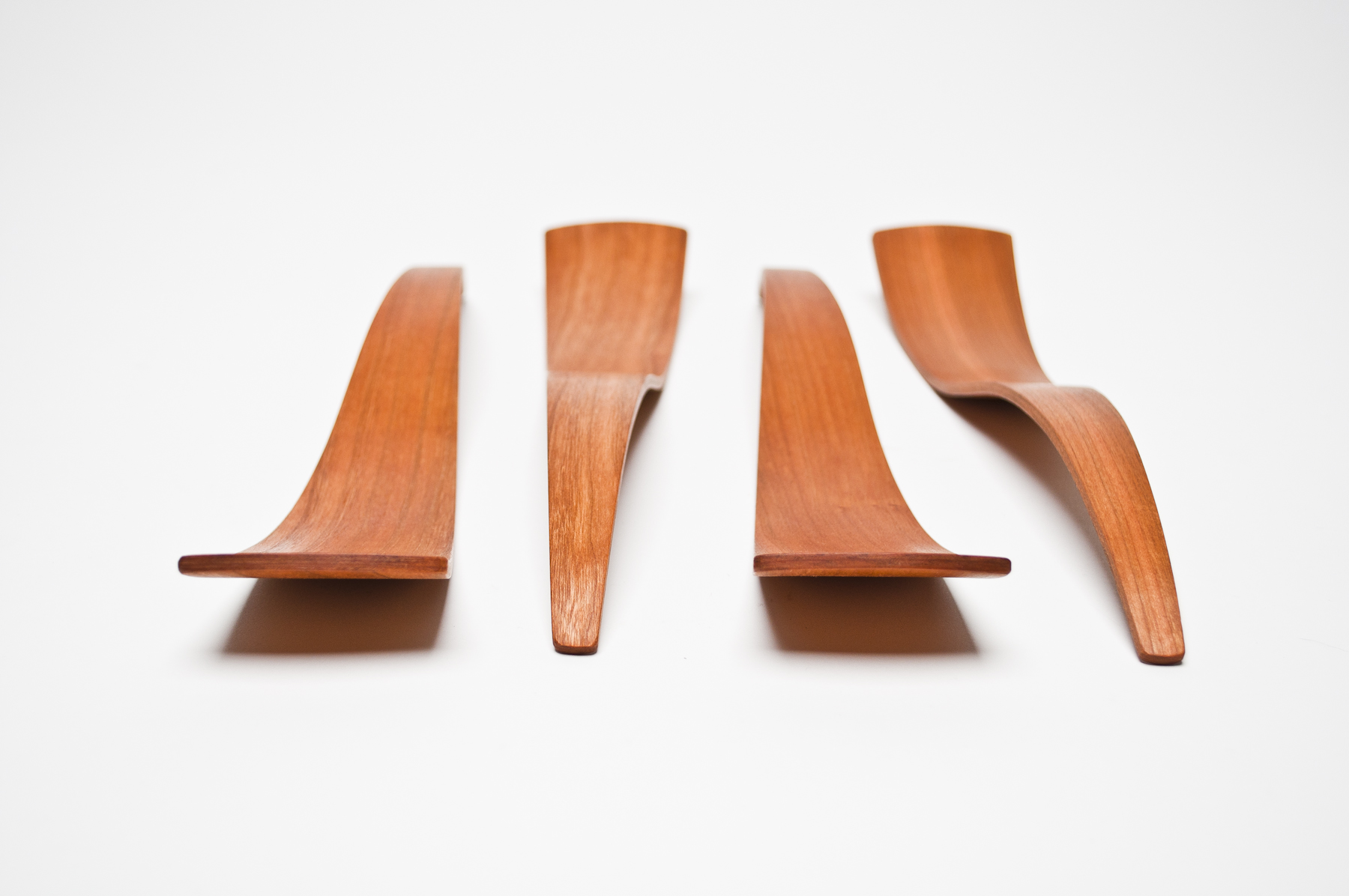
Here is my preferred mode of transportation on days like this. It only took about half an hour to ski in and I only had to take the skis off once to cross a major intersection. The rest of the way was kick and glide, kick and glide.

dsc00379a.jpg

By the time to storm got really bad I had classical music on in the shop and was chopping out mortises on an art nouveau style mirror frame I’ve been commissioned to make.

dsc00381.jpg

Some of my favorite hand tools are my set of Sandvik chisels and the maple mallet I made many years ago.

dsc00378.jpg

The mirror frame was designed by a client, a design firm, for a client of theirs out in California. They sent me a hand drawn design that I turned into a CAD drawing on Rhino. From that drawing I was able to print out enough data to create full size templates. I use lead ingots that I’ve fashioned into lofting ducks that can be used to hold a thin wood spline to pick up a curve from plotted points.

As the afternoon wore on I started getting phone calls about how bad the weather was getting, a friend asking why I was still at work, my wife saying she had made it home, so I decided to close up early, strap on my skis and head out.

The wind had picked up to 25 mph with gusts over 35 and the snow was still coming down hard. I picked a path that climbed the high ground above the river early on so that I could ski down hill for most of the way to the bridge I had to cross. I skied across a wide field in a park and tracked across the face of a large hill. It was quite disorienting as the snow in my face and the snow on the hill in front of me blended into a uniform visual field of all white. Eventually I came upon some hearty down hill skiers taking runs down the hill and climbing back up.

A little further on some folks saw me skiing and brought out a camera and asked me to stop for a picture, many people shouted encouragement, one woman wanted me to ski by tomorrow to give her ride to work on my skis! I love the way big storms bring out the best attitudes in people.

It took a good hour to make it home. The wind really slowed me down, but there were some great sections along the way that were pretty easy gliding.

Holly and I shoveled out our sidewalks. Tomorrow it will be back to shoveling as the snow is still coming down hard. It looks like we’ll end up with a good 20 inches out of this storm. For now I’m about to settle in and enjoy the rest of the evening inside.

Weather Class for Sailors

Lake Michigan

My son, Joseph Fillingham, will be teaching a class on weather for sailors through the Milwaukee Community Sailing Center. The class will be held on Thursday, February 28th, 2008. He’s posted about it on his web site and you can see more here.

Joe has a degree from the University of Wisconsin in Atmospherics and Oceanography. He has also been sailing the Great Lakes for many years and has been a sailing instructor for several years as well. If you have any interest in sailing and are near Milwaukee, Wisconsin you will want to sit in on this class.

new web site up

index-page.jpg

I’ve finally got the new web site up and most of the kinks worked out. I’ve still got to get the “client pages” completed but that can wait a little while, at least until I have a client interested in keeping tabs on their project through my site. Here’s a post I did about that page.

I designed the site by first assessing what my goals were in having a web site. Initially, my first three sites were focused on simply putting up on the web a limited portfolio of my work so that people that had already heard about me in some way could easily see what sort of work I do. This time around my goals are a little more.

I want this site to attract new customers, tell people exactly what it is I offer and answer the question why they should chose me to make furniture for them.

I started by surveying past clients and asking them what they would have liked to have seen on my earlier site. Most of them said they found the site by accident and were not exactly sure what it was that I did when they first saw the site. They had a felt need to find someone who would make a piece of furniture for them and even though that is exactly what I do my earlier site did not clearly communicate that. I decided that I would try and communicate to anyone seeing my home page that it was a very easy and simple process to have me design and make their furniture and that I would take personal care to make sure that they received exactly what they were looking for. Their need was met, they found me.

The rest of the site would be dedicated to showing that I had the experience and skills to accomplish the work they wanted done, that they would be very happy with the results and that they could trust me. The portfolio shows the breadth of my experience and the depth of my skills. It wasn’t easy to do because I really do not find it easy to “sell” myself (really!) but, since I think the best way to tell people about the experience of having me build furniture for them is to include testimonials from past clients, I added a page of testimonials. You may notice that the final home page differs from the image above by the added link to a testimonials page.

To build trust I decided to tell my story which is what this blog is all about, so I added a link to this blog. I also added a pretty basic faq page so that some of the initial questions can be answered for people upfront. On the portfolio page I’ve included sections for some of the art I’ve done as well as pieces in my current designs collection. These pieces are priced to sell on a made to order basis and I hope will generate some sales but if nothing else will give an idea of what my charges are like.

As I mentioned in an earlier post about the new site I did the design work for the site by mocking up pages using Paint Shop Pro and I had someone else, Nate Kroll, do the actual coding. We worked together with Nate telling me what could be done and what couldn’t and me getting back him with new ideas to work around initial problems. Nate needs to insert a credit for his work on the site and I keep reminding him to do so. He’ll get to it sooner or later, but I’d like to pass on any new jobs for web site building I can to him. I’ll be adding much more to the portfolio as time allows as I have images of many more projects and I’ll be digitizing my slide collection as well. Before I add too many new items though we have a slight technical glitch I’d like to resolve. The slider bar on the left side of the portfolio page resets when you click on related items thumbs and once the list gets much longer that may be disconcerting for people. I will add new art work though in the mean time.

Studio made slide scanner

I’ve never been happy with the results of scanning slides on my Microtek ScanMaker 4850 with the slide attachment. Some of the slides came out fantastic while others were horrible. So I started doing a little research into buying a new slide scanner and read quite a few online reviews and comments by others. While some seemed pretty good they were quite expensive and I wasn’t about to plunk down several hundred dollars for a scanner I wasn’t sure would really do the job for me. The lower end ones seemed to be no better than the set up I had already, however the least expensive scanner intrigued me. It was an attachment to your digital camera that held the slide. You would then point your camera with the attachment towards an appropriate light source and take a picture of your slide.

As I thought about this I decided I needed to do a little proof of principle research to see if this could really work. As I got into it I realized that I could put together something that worked on this principle myself. Here’s is the set up so far:

set-up-1.jpg

The set up starts with my light table, something I put together years ago from an old studio lamp and some sand blasted glass. I found that it really helped to eliminate extraneous light and to have the slide well away from the glass so that the camera could focus on the slide and not on the texture of the sand blasted (not really “ground”) glass. To accomplish this quickly, again I’m still in the proof of principle mode here, I taped together some card stock as shown.set-up-2.jpg
It also was helpful to have the slide line up in the same place every time as my light table did not uniformly distribute light over the glass. The center was brighter than the edges. At this point I taped the box onto the glass and tilted the “light table” so that I could use my camera on a tripod to try a few shots. Those initial test images were promising but there was too much light coming in from the studio as incident light on to the slide.
I took a plastic container that once held yogurt, cut a hole in the bottom of it and painted it black and then set that on top of the slide holder. I placed my camera on top of that container and had my scanner.

set-up-3.jpg

When I get a little more time I’ll work on getting the camera settings fined tune. Here’s one of my test shots after a little doctoring with my Paint Shop Pro application.

Fish Table

I have got tons of slides, I can’t wait to scan some of the best and put them up in my portfolio of my new web site.
Milwaukee Art Museum, art and wilderness

I was fortunate enough to be able to participate in an online chat today with the new, incoming director of the Milwaukee Art Museum (MAM), Daniel Keegan. The format was casual and the event was obviously meant to introduce Mr. Keegan to the Milwaukee community.
Here’s my 2 cents.

Q: Todd Fillingham of Milwaukee - The MAM has a unique relationship to Lake Michigan. Beyond Calatrava’s kinetic, architectural expression of this how do you envision the influence of MAM’s wonderful location in the shaping of future shows and programming?

A: Daniel T. Keegan - Thanks Todd. No question that the total environment of MAM includes its beautiful surroundings, parks and the lake. The Board and staff of the Museum have begun exploration of how the outdoor environment can be further developed as part of the Museum experience. I will pick this up as one of the opportunities ahead.

I thought Mr. Keegan, gave a good answer, especially since he was responding quickly and had many topics to respond to. My question however sought to go deeper than simply expanding the museum experience into the outdoors. I was thinking particularly about how this extraordinary work of architecture is sited within this city.

Orca under sail.

The significance of this location cannot be overlooked. Prior to the Calatrava addition the building designed by Eero Saarinen was and still is momentous not only because of it’s design but also because of it’s site. I do not want to discuss the relationship between architecture and site here, what I do want bring up though is the relationship between a building that houses and displays art, a great building that houses and displays art and this particular location.

The MAM is situated right at the water’s edge. At the edge of a great lake, one of the Great Lakes, Lake Michigan. This juxtaposes an institution dedicated to one of the civilized world’s highest accomplishments with the wild. For Lake Michigan is a wilderness. And yet this is not completely disharmonious, in fact it reflects a relationship between civilization and wilderness that art mediates. Cryptozoic impulses infuse art. Feral energy animates art. “Fear no art” the bumper sticker says, but who among us faces art unprotected, unshielded, undressed?

Art museums also govern much of the relationship society has with art, they create the means by which most people evaluate art, they offer access to art, they influence the creation of new art, they are gate keepers. MAM is at the gateway to the city of Milwaukee. Traveling from the wilderness into the heart of the city travelers must cross this threshold.

Surf Board Table III-ix

The table has been delivered! Here are a few more shots I took before making the delivery. If you’re interested, check out my portfolio.

Surfboard Table by Todd Fillingham

Surfboard Table by Todd Fillingham

Surfboard Table by Todd Fillingham

Surfboard Table by Todd Fillingham

add to del.icio.us :: Add to Blinkslist :: add to furl :: Digg it :: add to ma.gnolia :: Stumble It! :: add to simpy :: seed the vine :: :: :: TailRank :: post to facebook

Surf Board Table III-viii

The table is finished and I am in the process of shooting photos of it before I deliver it. Here’s a nice detail of the edge.

Edge detail

Steel, Stone and Wood

Go to the bench stone, use your two hands and achieve the fundamental knowledge, experience and wisdom in your heart and mind. -Toshio Odate

steel-stone.jpg

The sharpening area in my studio.

Sharpening high carbon steel is basic to working wood.

Years ago I use to take all of my saw blades, jointer and planer knives and shaper cutters to a man who ran a small sharpening shop just west of downtown. Besides sharpening tools he also sold machinery, power tools, planer and jointer knives and saw blades. He had been connected with woodworking for many years and knew a lot about the trade, the tools, the people and the shops in Milwaukee. I wish I could remember his name. We always called him the guy out on State Street. His shop was actually a block north of State Street, but there wasn’t much else out that way back then so you could always find him if you drove just west of 12th Street on State.

There was a time when most large companies had woodworking shops as part of their organization. I was in one once, as it’s tools were being sold off, that had been on the top floor of a very large department store in the heart of downtown.

When I bought my table saw at an auction the guy on State Street knew that very saw. He asked me if there was still a stain on it from the time such and such had cut a couple of fingers off. The stain is still there, a reminder of the relationship between consequences and inattention.

I bought my shaper from the State Street guy. I discussed it with him for some time working out what I needed and what I could afford. He then ordered it from the manufacturer, set it up in his shop to make sure it worked, made a few adjustments, took it apart again and then delivered it and set it up again in my shop. He showed me a few of the more obscure aspects of that machine even throwing in an extra spindle at no charge. He was generous, but it was also good business. He knew that I was likely to buy more shaper cutters from him if I had two different size spindles.

He sharpened my blades and knives for me but I sharpened my own chisels. Wood chisels have to be kept very sharp at all times or they can be a dangerous tool. If the blade doesn’t do what you are intending it will likely slip. A slip with even a dull blade can cut through skin, tendons and muscle.

There is much said about how to sharpen tools. Just about any discussion among folks who rely on tools tends to get very esoteric about every detail in sharpening. Some folks swear that certain oils used to lubricate the sharpening stone are critical to a “truly sharp edge”. Others insist on particular stones mined from a particular region in Arkansas are absolutely essential to obtaining the “truly sharp edge”. Angles of bevels and micro bevels are studied and discussed. Some sharpening stones are best lubricated with oil, some with water. Water stones need special treatments.

I would walk into the State Street guy’s shop and bring up some of these cabalistic axioms, maybe hoping for some sage advice to set me on the path to the “truly sharp edge”. He took pity on me at some point eventually taking me back into the shop where his one employee was finishing up a set of jointer knives for me.

I don’t know what the guy on State Street would’ve thought of Toshio Odate’s words about sharpening. He died of prostate cancer some years ago. His wife tried to keep the shop open for a while, but what that shop offered was him and he was gone. The many wood shops around the city were gone as well. The neighborhood had gotten rough. One day I found a sign on the shop that it had closed.

What I did learn from the guy on State Street was that there really is no one path to the “truly sharp edge”. He showed me that he used water to lubricate an “oil stone”. That the grit of the stone was what he paid attention to, not where the stone had been mined or manufactured. He showed me that it was how you held your body, when you stroked the blade over the stone, that held the blade at the right angle. In a way he showed me that it was my steel, my stone and my wood that counted.

My set up works for me. I can stand comfortably holding the blade to the stone. I can lean as one with the blade, my hand, my arm, my back moving across a stone that I’ve had for at least 20 years. Water is at hand for lubrication.

I get my knives and blades sharp enough to easily shave a few of my hairs off the back of my wrists. That’s sharp enough. I know how sharp they are so I know how they will work the wood. I feel the cutting and know when to sharpen again. It takes time when I use my two hands. A very deep, very long time.

detail

Armoire by Todd Fillingham

Details of an armoire I designed and built.

Tamo burl ash, figured anigre and curly maple veneers with a piece of Honduras mahogany.

These are the drawers behind the doors:Hand cut dovetail drawers.

Ahhh summer…

We drove north to be with extended family for a Christmas get together over the weekend. We had to drive through very dense fog with almost zero visibility at times on Saturday, then the temperature dropped on Sunday as very gusty winds came through. Sunday morning started out around 40 degrees before sunrise and had dropped to 16 degrees by 9 AM. Luckily we missed the worst of the snow, just to the west of us they got 10-12 inches.

When we made it back home, safe and sound there was a hand made Christmas card in the mail that contained a CD of pictures. The card and pictures were from Fred and Pat, very close friends. Fred and I use to share the shop space that I eventually took over after Fred moved out. They also happen to own a small sailboat.

One day back in 2006 they were out sailing and I sailed by while single handling the Orca. Pat took a series of pictures as I tacked around them and then sailed on. I’d been badgering her for copies for some time and low and behold here they were on the CD. What a great summer’s day back in 2006.

Todd sailing Orca.
Look Ma, no hands!

What a great gift to have received as winter starts in earnest. Thanks Pat!

Surf Board Table III -vii

black-grain.jpg

I tried to get an image that shows how the black dye along with my oil finish brings out the grain in the ash wood used to make the base of the surfboard table. One of the reasons that I dye the wood is to accentuate the grain to create a fluid-like pattern under the top.